
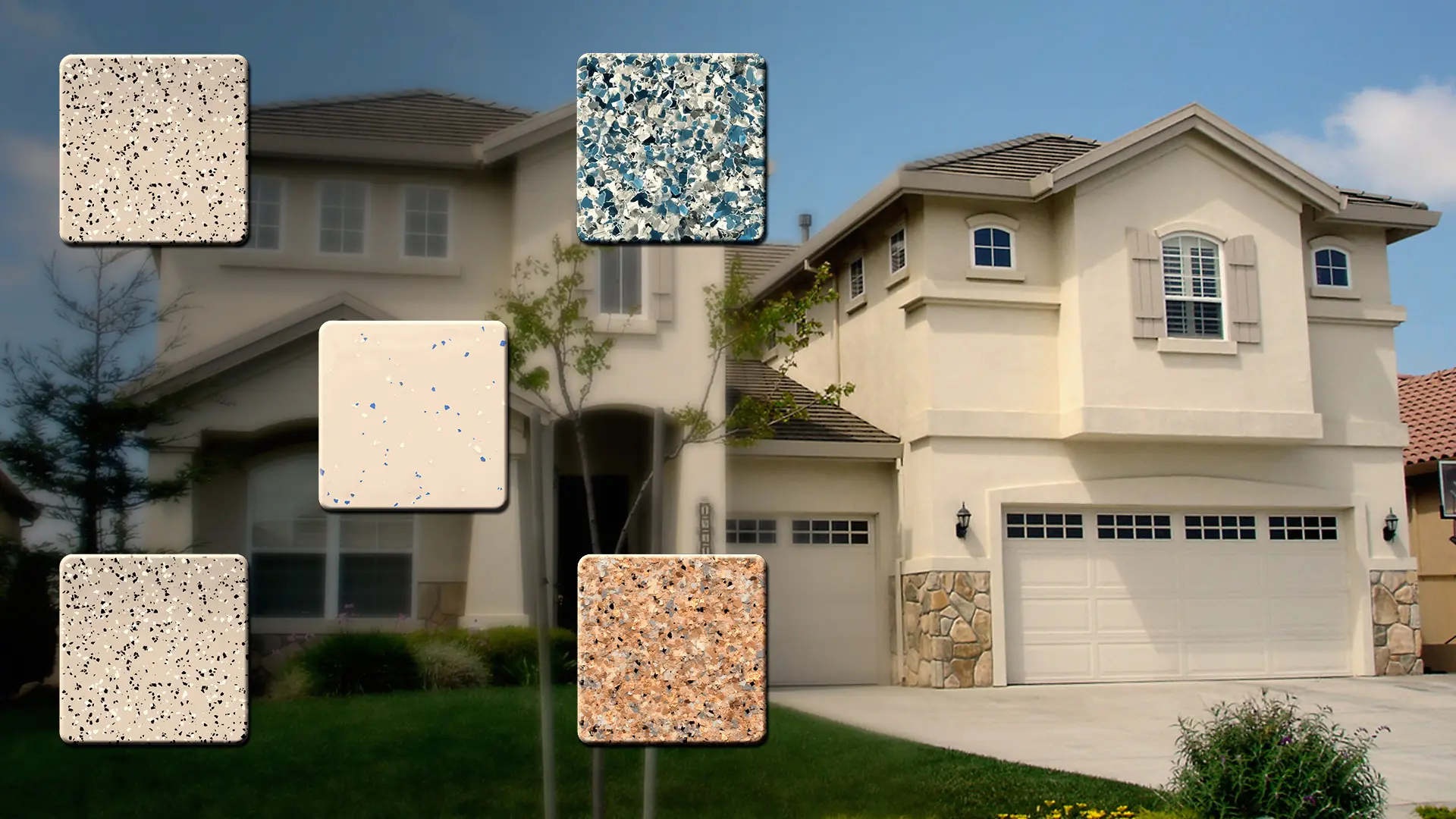
Homeowners researching polyaspartic flooring sometimes assume the best garage floors rely on a single high-performance coating. In reality, professional installers build garage floor coating systems using multiple coating products, each selected for a specific job. This layered approach is especially important in Maryland, where moisture, temperature swings, and daily use all affect long-term performance.
Polyaspartic Coatings Perform Best When Moisture Is Managed First
Concrete in Maryland (and everywhere in the US) often contains hidden moisture, even when it looks dry on the surface. Applying a quick-cure polyaspartic (or polyurea) coating direct-to-concrete can lead to blistering or loss of adhesion in due time. As superb as these coatings are as topcoats, they fail to properly mitigate for moisture when applied as direct-to-concrete primers. That is why professionals start with a slower-curing, moisture-mitigating epoxy coating as the primer to address conditions beneath the concrete surface.
Epoxy Floor Coating Provides the Structural Base for Subsequent Polyaspartic Top Coat
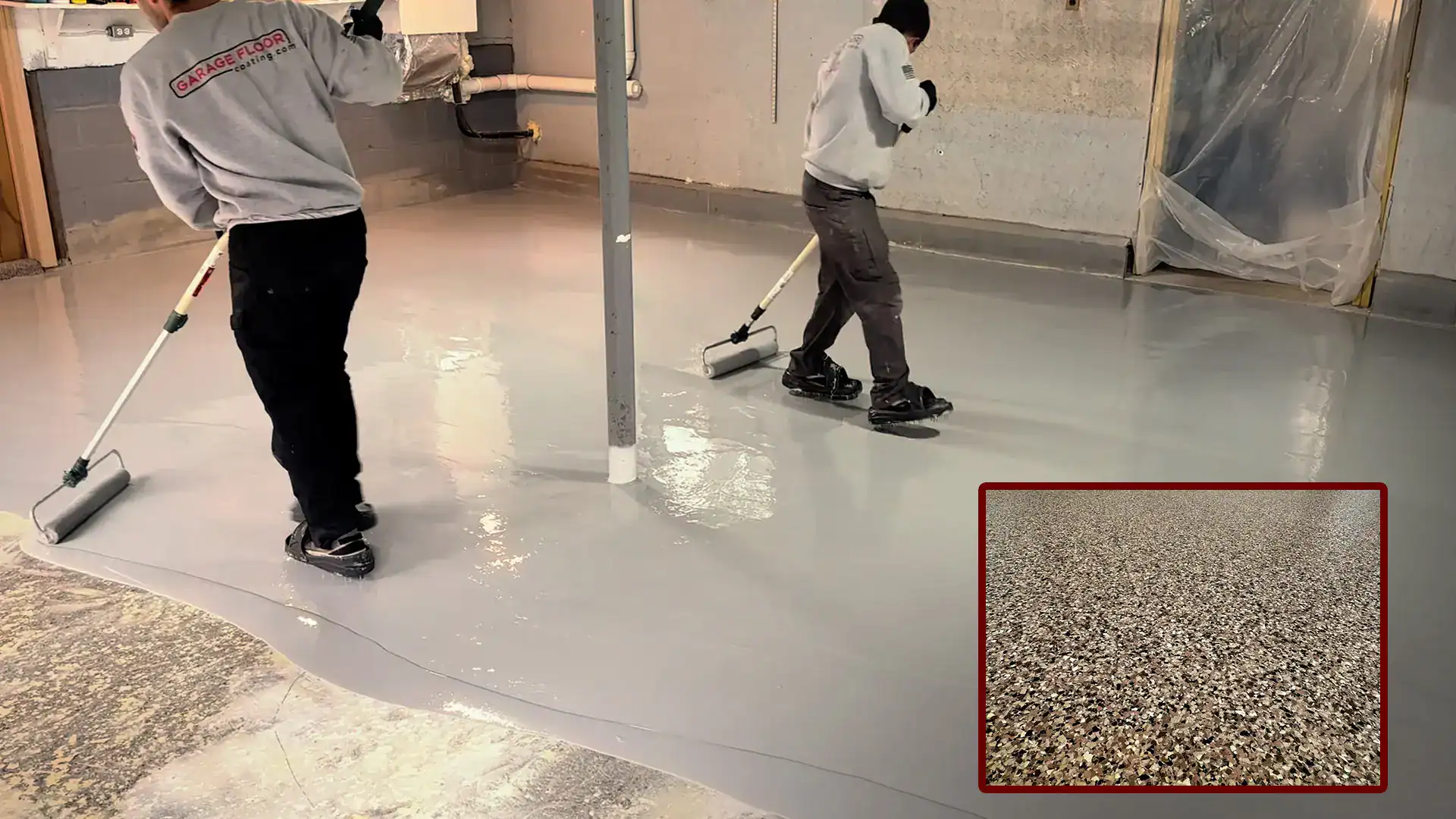
A moisture-mitigating epoxy coating plays a critical role as the primer (base) coat. As a high-build coating, a moisture-mitigating epoxy can be applied thickly and its slow-curing nature allows for deep penetration of the concrete slab. As such, this coating is an ideal direct-to-concrete primer coat. It creates a strong, stable foundation supporting long-term adhesion of the entire coating system.
Epoxy flooring is also commonly used in indoor spaces where UV exposure is limited. While epoxy has lower UV resistance, its strength lies in structural performance rather than surface protection.
Polyaspartic Coatings Handle UV, Wear, and Daily Abuse
Once the moisture-mitigating epoxy is applied and the chosen flake blend broadcast into it, only then should a polyaspartic coating be applied as the protective surface. Polyurea-polyaspartic coatings cure very quickly (in < 1 hour) and provide excellent resistance to UV exposure, chemicals, oils, and hot tire transfer. This hybrid approach helps garage floor coatings mitigate for moisture, maintain their appearance, and performance through years of use.
Polyaspartic and polyurea coatings are simply not recommended for direct-to-concrete application; they work best as color and top coats…installed over a moisture-mitigating epoxy.
Choose a Polyaspartic Flooring System Built to Last
Professional installers do not rely on a single coating type because no product excels at every function. A moisture-mitigating epoxy handles bonding and future moisture-related issues, while polyaspartic coatings deliver surface durability and UV stability. These hybrid systems, which can take 2 days to install, provide unmatched durability (“1-day” systems can’t compete).
Garage Floor Coatings of Maryland offers a Live Coatings Visualizer, allowing you to preview colors and flake blends in your actual garage or home before installation begins.
If you are considering hybrid epoxy and polyaspartic flooring, contact our team to schedule a consultation and design a garage floor coating system built for long-term durability and real-world conditions.